
Insects
Do Ants Have Eyes? ALL You Need To Know (2023)


Last Updated on June 19, 2023 by israel olaniran
Ants, those small and industrious creatures that scurry around tirelessly, have always piqued our curiosity. They exhibit intricate social structures, impressive strength, and remarkable adaptations to their environment. One aspect that has captivated scientists and enthusiasts alike is their sensory system, particularly their vision. In this article, we delve into the world of ants and explore the question: do ants have eyes?
Read: how many eyes do ants have?
Do Ants Have Eyes?
Ants do have eyes, although their visual capabilities differ from those of humans. Ants possess compound eyes composed of numerous tiny units called ommatidia, which provide them with a wide field of view. These complex structures allow ants to detect light, perceive motion, and navigate their environment. While their visual acuity and color vision may be limited compared to humans, ants compensate for these limitations with their exceptional chemoreception (smell) and tactile sensitivity.
The combination of their visual, olfactory, and tactile senses enables ants to communicate, forage, and navigate effectively in their intricate social and natural environments.

The Ant’s Sensory System
The Importance of Vision in Ants
Vision plays a crucial role in the lives of ants, aiding them in various tasks such as foraging, navigation, recognizing nestmates, and communicating vital information. While other senses like smell and touch also contribute significantly, vision provides ants with a broader perspective of their surroundings.
Read: do ants have brains?
Compound Eyes: A Common Feature
Like many insects, ants possess compound eyes. These compound eyes are composed of numerous tiny units called ommatidia, each functioning as an independent photoreceptor. Together, they form a mosaic-like pattern that covers the ant’s head and provides a wide field of view.
Read: do chicken eat ants?
The Anatomy of an Ant’s Eye
Compound Eyes: Complex Structures
An ant’s compound eyes are more than just clusters of ommatidia. They consist of several components, including the cornea, crystalline cone, pigment cells, and optic nerve. Each of these structures contributes to the ant’s visual abilities.
🐾 Are you a dog owner who wants to ensure your dog gets the absolute best in terms of nutrition?

Read: can ants swim?
Facet Structure and Photoreceptors
The facet structure of an ant’s compound eye allows for a large number of ommatidia, increasing their overall visual sensitivity. Within each ommatidium, there are specialized cells called photoreceptors that convert light signals into electrical impulses, providing ants with visual information.
Visual Capabilities of Ants
Ants and Ultraviolet Light
One fascinating aspect of ant vision is their ability to detect ultraviolet (UV) light. Many flowers and objects in their environment have distinct UV patterns that are invisible to humans but stand out to ants. This adaptation allows ants to navigate their surroundings more effectively and locate food sources.
Detecting Polarized Light
Ants can also perceive polarized light, which is light that vibrates in a specific plane. This ability aids in navigation and orientation, as it helps ants determine the position of the sun even when it’s obscured by clouds or other obstacles.
Motion Detection
Ants excel at detecting motion, thanks to their compound eyes’ ability to quickly perceive changes in their visual field. This skill helps them identify potential threats, track prey, and coordinate collective movements within their colonies.
Limitations of Ant Vision
Poor Acuity and Color Vision
Despite their remarkable visual adaptations, ants have limitations in their vision compared to humans. They have relatively poor visual acuity and color vision, perceiving the world in a more limited color range. However, their other senses compensate for these limitations, allowing ants to thrive in their environments.
While ants heavily rely on visual cues, they are also adept at navigating in darkness. They use alternative sensory mechanisms such as their well-developed antennae, which enable them to detect chemical signals and vibrations, aiding their orientation in low-light conditions.
The Role of Other Senses in Ants
Chemoreception: The Power of Smell
Chemoreception, specifically through their antennae, is a vital sense for ants. They use chemical cues, such as pheromones, to communicate with their nestmates, mark trails to food sources, and identify colony members. The olfactory prowess of ants complements their visual abilities, contributing to their overall success.
Tactile Sensitivity: Feeling the World
Ants possess highly sensitive touch receptors, allowing them to perceive physical cues from their environment. They can feel vibrations, textures, and even minute changes in their surroundings. This tactile sensitivity aids in tasks like exploring new terrain, finding suitable nest sites, and manipulating objects.
Ants and their Extraordinary Adaptations
Collective Intelligence and Communication
Ants are renowned for their collective intelligence and efficient communication systems. Through pheromone trails, vibrations, and even antennation, they relay information about food sources, danger, and the needs of the colony. This sophisticated network of interactions contributes to their survival and ability to exploit resources.
Navigation is a crucial aspect of an ant’s life. They utilize a combination of visual landmarks, polarized light, pheromone trails, and spatial memory to find their way back to the nest and navigate their foraging paths. These skills allow them to explore large territories and optimize their resource-gathering efforts.
Ants and the Environment
Ants have successfully adapted to various ecosystems, ranging from deserts to rainforests. Their visual and sensory adaptations, along with their ability to modify their environment, contribute to their resilience and survival. They play vital roles in seed dispersal, soil aeration, and pest control, making them essential components of many ecosystems.
Final Thoughts On Do Ants Have Eyes?
In conclusion, ants do have eyes, and their visual abilities are fascinating. Their compound eyes, though not as sharp or colorful as human eyes, provide them with essential sensory information for their daily activities. Alongside their other senses, ants employ a combination of vision, chemoreception, and tactile sensitivity to navigate, communicate, and thrive in their intricate world. Understanding the sensory world of ants allows us to appreciate their remarkable adaptations and the vital roles they play in ecosystems worldwide.
FAQs (Frequently Asked Questions)
How many eyes do ants have?
Ants typically have two compound eyes, located on the sides of their heads.
Can ants see in the dark?
While ants rely on visual cues, they also have well-developed alternative sensory mechanisms, such as chemoreception and tactile sensitivity, which aid their orientation and navigation in low-light conditions.
Do ants see in color?
Ants perceive a limited range of colors compared to humans. Their color vision is not as vibrant or diverse as ours, but they can differentiate between certain colors.
How do ants communicate through their eyes?
Ants primarily communicate through chemical signals called pheromones. While their eyes play a role in recognizing nestmates and detecting visual cues, most of their communication occurs through other sensory modalities.
Can ants recognize human faces?
Ants do not possess the same level of visual recognition as humans. They primarily rely on chemical cues and other sensory information to distinguish between individuals within their colonies.
Can ants see you?
Ants perceive their environment through compound eyes, but their visual acuity is generally not developed enough to recognize individual humans. They are more likely to respond to movement, vibrations, or chemical signals rather than visual cues.
Do ants have eyes?
Yes, ants have eyes. They possess compound eyes composed of numerous ommatidia that allow them to detect light and perceive their surroundings.
Can ants see anything?
Ants can see, but their visual capabilities are different from those of humans. They have limited visual acuity and color perception, but they can detect light, motion, and certain patterns.
Are ants blind in the dark?
While ants rely on visual cues, they can navigate in the dark using alternative sensory mechanisms. Their well-developed chemoreception and tactile sensitivity help them orient themselves and detect objects and other ants even in low-light conditions.
Do ants have brains?
Yes, ants have a central nervous system that includes a brain. Their brains are relatively simple compared to larger organisms but still enable them to process sensory information and exhibit complex behaviors.
How many eyes do ants have?
Ants typically have two compound eyes, positioned on the sides of their heads. Each compound eye consists of multiple ommatidia, which collectively contribute to their visual perception.
Do ants have hearts?
Yes, ants have a circulatory system that includes a heart-like structure called a dorsal aorta. However, their circulatory system differs from that of vertebrates and functions differently.
Do small black ants have eyes?
Yes, small black ants, like many other ant species, have eyes. The size and color of the ants do not affect their possession of eyes. They rely on their visual capabilities, along with other senses, to navigate their environment.
How do ants see humans?
Ants primarily perceive humans through movement, vibrations, and chemical signals. While they may not recognize humans as individuals, they can detect their presence and respond accordingly.
How many legs do ants have?
Ants, like most insects, have six legs. These legs are specialized for various functions, including walking, climbing, carrying food, and communicating through touch.
Do ants have ears?
No, ants do not have ears in the same way humans do. They primarily rely on vibrations and chemical signals for communication and perception of their environment.
Do ants have feelings?
Ants do not have emotions or feelings as humans experience them. Their behaviors are driven by instinct and responses to stimuli rather than emotional states.


Last Updated on February 11, 2024 by israel olaniran
The Australian Walking Stick, scientifically known as Extatosoma tiaratum, is a remarkable insect species found primarily in eastern and southeastern Australia. These creatures belong to the order Phas`mida, which comprises stick insects and leaf insects.
Read: how long do sand flea bites last
The Appearance of the Australian Walking Stick
The most striking feature of the Australian Walking Stick is its astonishing resemblance to a twig or a small branch. Their body shape, color, and texture all contribute to this uncanny mimicry, which is a key survival strategy.
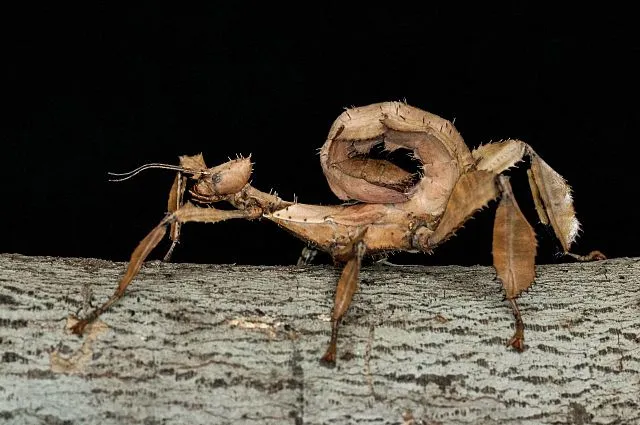
Female adult E. tiaratum are covered with thorn-like spikes for defense and camouflage. Their long, rounded bodies grow to about 20 cm (8 in) long.[4][5] The females are further described as “heavy-bodied, brachypterous and having numerous spines and integumental expansions on the face and legs, including a tuft of spines on the conical occiput of the hypognathous head”.[9] As mentioned, the wings of the female are too small for flying, especially when she is gravid.[2]
Exhibiting the sexual dimorphism of many similar insects (particularly other phasmids as well as mantises), males are small and thinner, growing only about 11 cm (4.5 in) in length and have three ocelli. Males lack the thorny growths except for spikes around their faces. They have long wings and are good flyers who readily take to the air if disturbed or in search of females.[4][10]
Read: do ants poop?
Mimicry Mastery
One of the most astounding aspects of the Australian Walking Stick is its mimicry ability. These insects have evolved to resemble the plants in their environment so well that they can seamlessly blend into trees and shrubs, making them nearly invisible to predators.
Read: do ants have hearts?
Habitat and Distribution
Australian Walking Sticks are primarily found in eucalyptus forests and woodlands. They are well-adapted to this environment, which provides them with the vegetation they need for both camouflage and sustenance.
🐾 Are you a dog owner who wants to ensure your dog gets the absolute best in terms of nutrition?
Read: what eats butterflies
Diet and Feeding Habits
These herbivorous insects primarily feed on the leaves of eucalyptus, wattle, and bramble bushes. Their feeding habits are an essential part of their role in the ecosystem.
Read: why do bees have sticky hair?
Life Cycle
The life cycle of the Australian Walking Stick is intriguing. They undergo a series of molts as they grow, shedding their exoskeleton to accommodate their increasing size. This process continues until they reach maturity.
Read: what does a queen ant look like?
Reproduction
Reproduction in Australian Walking Sticks is unique. The females are parthenogenetic, meaning they can reproduce without the need for fertilization by a male. This ability simplifies the process of reproduction and ensures the survival of the species.
Defensive Mechanisms
When threatened, these insects employ various defensive mechanisms, including releasing a foul-smelling chemical to deter predators. This chemical can be irritating to the skin and mucous membranes, serving as an effective deterrent.
Read: early signs of bed bugs
Adaptations for Survival
The Australian Walking Stick’s body structure is adapted for survival in its specific habitat. They have long, slender bodies with legs that resemble twigs. This helps them stay hidden from predators and blend seamlessly with their surroundings.
Interaction with Humans
While not commonly kept as pets, some enthusiasts have successfully maintained Australian Walking Sticks in captivity. Their unique appearance and behavior make them a source of fascination for insect enthusiasts.
Australian Stick Bug
| Fact | Description |
|---|---|
| 1. | Mimicry Masters – They excel at resembling twigs or branches for camouflage. |
| 2. | Unique Reproduction – Some can reproduce without males through parthenogenesis. |
| 3. | Herbivores – They feed on leaves of eucalyptus, wattle, and other plants. |
| 4. | Impressive Size – They can grow up to 4 to 7 inches (10-18 cm) long. |
| 5. | Habitat Specialists – Found in eucalyptus forests and woodlands. |
| 6. | Defensive Chemicals – Release a foul-smelling substance when threatened. |
| 7. | No Stingers – They lack stingers or venomous parts. |
| 8. | Various Colors – While mostly brown or green, some species are blue. |
| 9. | Swaying Behavior – They mimic swaying leaves in the wind for added camouflage. |
| 10. | Guardians of Ecosystems – Help regulate plant populations and serve as prey for predators. |
The Australian Walking Stick in Popular Culture
These insects have also found their way into popular culture. They often feature in books, documentaries, and even in movies where their incredible mimicry skills are highlighted.
Conservation Status
The conservation status of Australian Walking Sticks varies depending on their specific habitat and the threats they face. Efforts are ongoing to protect their natural environment.
Interesting Behavior
Apart from their mimicry and defensive mechanisms, Australian Walking Sticks exhibit other intriguing behaviors, such as swaying in the wind to further imitate a twig.
Can Australian Stick Insects Fly?
Australian Stick Insects, also known as Walking Sticks, are not known for their flying abilities. They are primarily ground-dwelling and use their impressive camouflage to avoid predators rather than relying on flight.
How Big Do Australian Stick Bugs Get?
The size of Australian Stick Bugs can vary, but they can grow up to 4 to 7 inches (10 to 18 centimeters) in length. Some individuals may be larger, while others may be smaller.
What Are the Benefits of Stick Bugs?
Stick bugs play a role in their ecosystems by feeding on leaves, helping to regulate plant populations. Additionally, they serve as a food source for various predators, contributing to the balance of their food web.
Is the Australian Stick Bug Poisonous?
Australian Stick Bugs are not typically poisonous to humans. They rely on camouflage and other defense mechanisms rather than toxic substances.
Do Australian Stick Bugs Have a Stinger?
No, Australian Stick Bugs do not have a stinger or any venomous appendages. They rely on mimicry and chemical defenses to deter predators.
Are Australian Stick Bugs Related to Scorpions?
Australian Stick Bugs and scorpions are not closely related. They belong to different insect orders. Stick bugs are part of the Phasmida order, while scorpions belong to the Scorpiones order.
Do Australian Stick Bugs Come in Blue Varieties?
While most Australian Stick Bugs are brown or green to mimic twigs and leaves, there are some blue stick insect species. These blue stick insects are relatively rare compared to their more common counterparts.
What Is a Gargantuan Stick Insect?
The term “gargantuan stick insect” likely refers to exceptionally large stick insect species. The size of stick insects can vary, and some species are indeed quite large compared to others.
How to Create a Stick Insect Enclosure?
Creating a suitable stick insect enclosure involves providing a spacious and well-ventilated container with appropriate food, such as leaves from their preferred plants. It’s essential to mimic their natural habitat and ensure they have ample space to climb.
Australian Walking Stick Facts
The Australian Walking Stick, or stick bug, is known for its incredible mimicry, herbivorous diet, and unique reproductive abilities. They are primarily found in Australia and nearby regions.
How to Save a Dying Stick Insect?
Saving a dying stick insect may involve addressing various issues, such as providing proper humidity, temperature, and nutrition. It’s crucial to consult with an expert or research the specific needs of the species to offer appropriate care.
FAQs
- Are Australian Walking Sticks dangerous to humans?
- Australian Walking Sticks are harmless to humans. They do not bite or sting and are generally docile.
- How long do Australian Walking Sticks live?
- The lifespan of these insects varies, but they can live for up to a year or more in captivity.
- Do Australian Walking Sticks make good pets?
- They can be kept as pets by enthusiasts who provide them with the right habitat and care.
- Are Australian Walking Sticks found only in Australia?
- While they are primarily found in Australia, related species are found in other parts of the world.
- Do Australian Walking Sticks have any predators?
- Birds, reptiles, and some mammals are known to be their natural predators in the wild.
Final Thoughts On The Australian Stick Bug
The Australian Walking Stick, with its remarkable mimicry and unique adaptations, is a testament to the wonders of the natural world. These insects not only serve as a reminder of the incredible diversity of life on Earth but also highlight the importance of preserving their natural habitats.

30 Fascinating Facts About Dogs You Probably Didn’t Know.

30 Interesting Facts About LoveBirds

The Majestic Tibetan Mastiff: A Symbol of Strength and Loyalty


-

 Domestic Animals3 years ago
Small But Smart: 10 Most Intelligent Small Dog Breeds
-

 Domestic Animals4 years ago
Why Do Dogs Look Away When You Eat
-
Wild Animals4 years ago
What Does Snake Poop Look Like? PICTURES & VIDEOS
-
Domestic Animals3 years ago
Why Does My Cat Sleep On My Feet? Best Reasons
-

 Pet News3 years ago
Trending Now: Woman Raised A Panther Thinking It Was A Cat.
-
Domestic Animals4 years ago
Can Guinea Pigs Eat Pears? All You Need To Know (2023)
-
Domestic Animals4 years ago
Can Guinea Pigs Eat Oranges? ALL You Need To Know!
-
Insects3 years ago
Australian Stick Bug: ALL You Need To Know.


